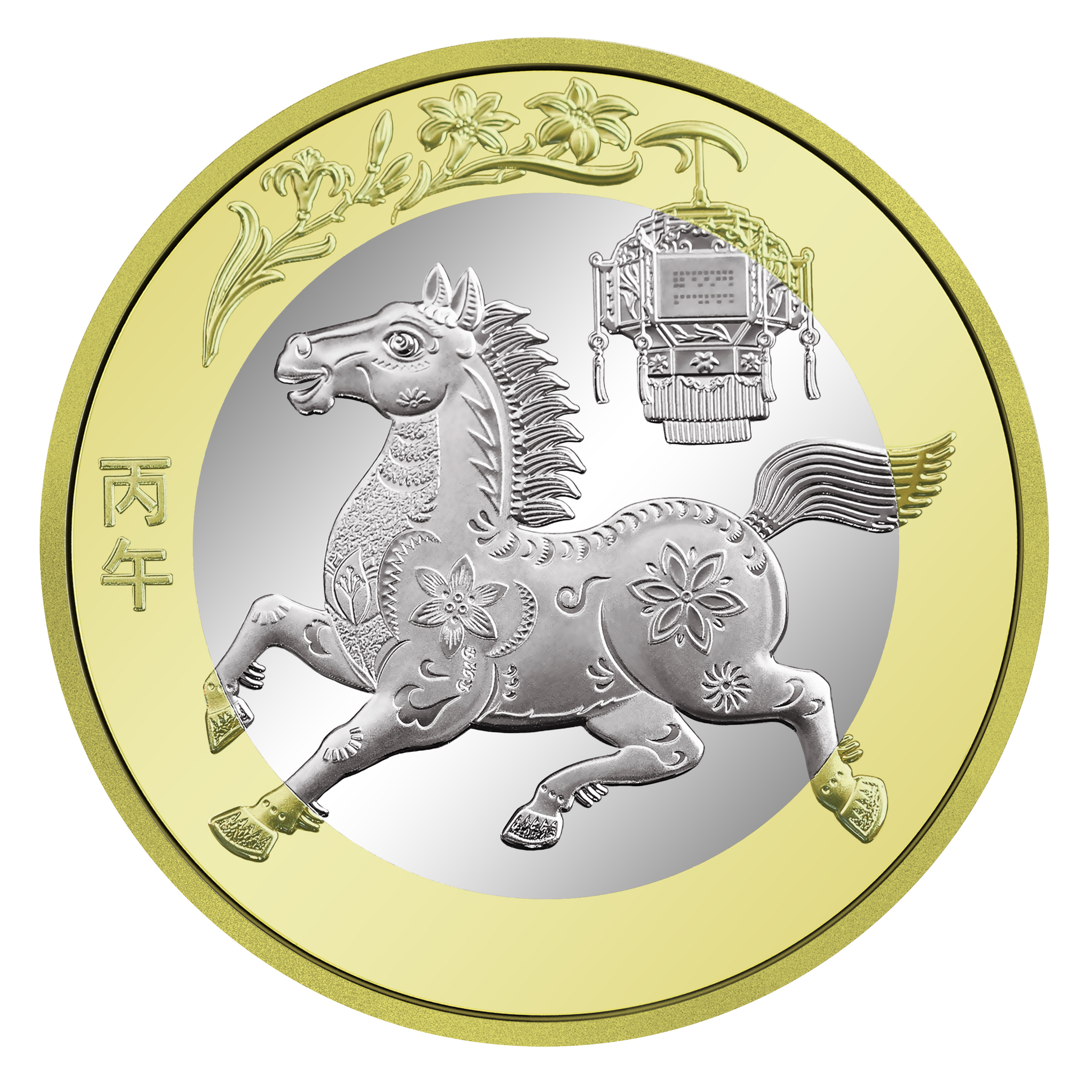

2026 Year of the Horse Commemorative Coin Issue Date 2025-12-22

Obverse (Front): Features the inscription of “People’s Bank of China” and the face value “10 YUAN.” It includes the Pinyin “SHIYUAN” and the year “2026,” set against a background of traditional floral patterns (Tuanhua).

Reverse (Back): Showcases a stylized Horse, combining traditional Chinese paper-cutting art with decorative New Year painting elements. The design is accented with festive lanterns and Daylily (Hemerocallis) patterns. The lunar year designation “Bing Wu” (丙午) in Chinese characters is inscribed on the left side.

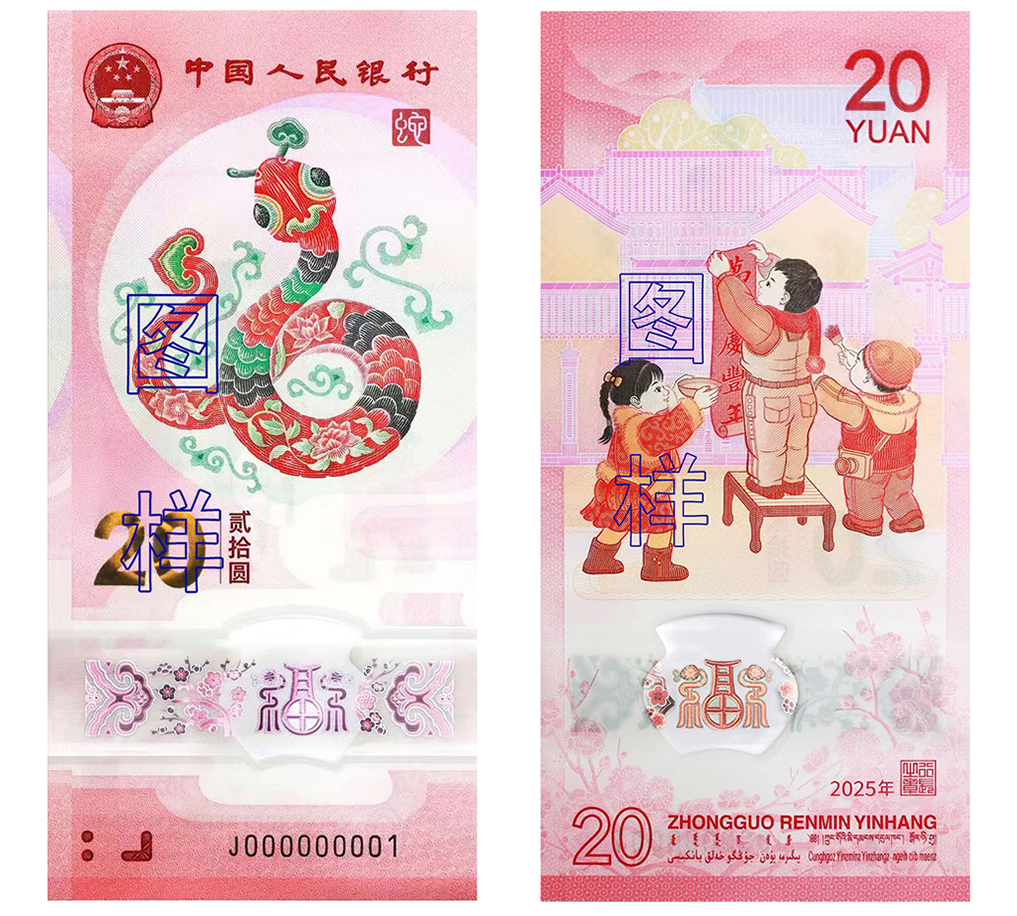
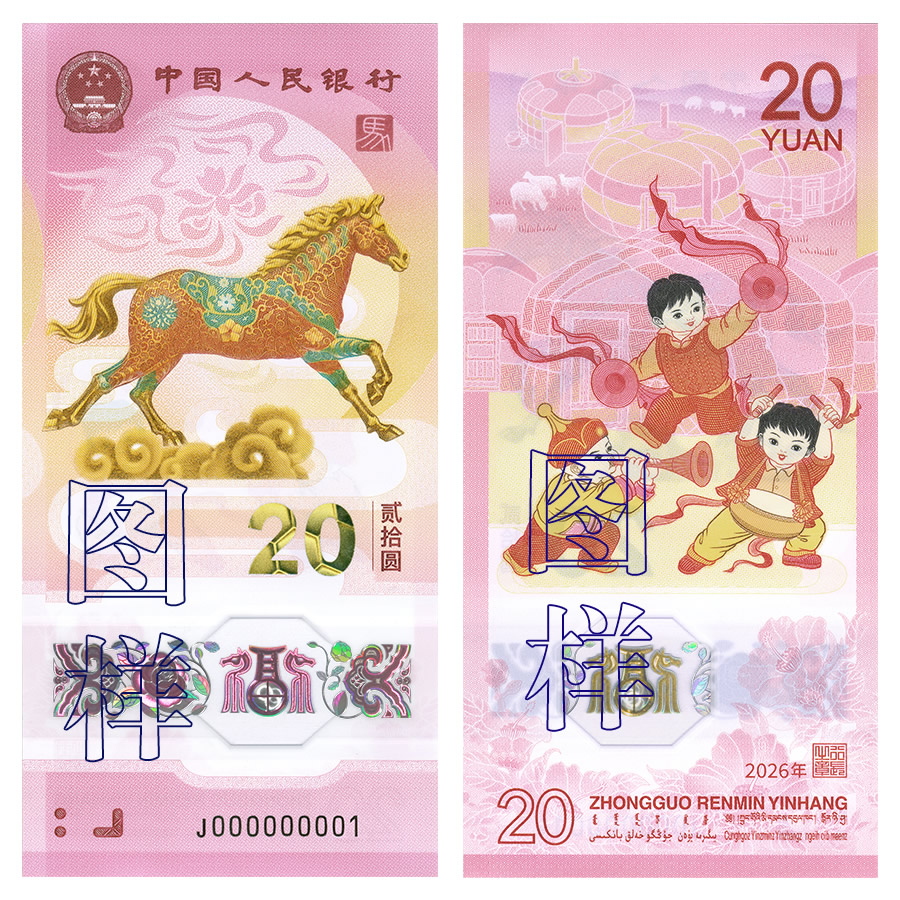
2026 Year of the Horse Commemorative Banknote Issue Date 2025-12-22

Front (Obverse): The main design features a stylized Horse. The top section displays the National Emblem of the PRC, the “People’s Bank of China” inscription, and a seal with the Chinese character for “Horse” in Seal Script. The lower section includes an OVI (Optical Variable Ink) denomination “20” and the Chinese “贰拾圆,” dynamic holographic patterns, a transparent window, braille denomination markings, and the banknote serial number.

Back (Reverse): The primary motif depicts children celebrating with gongs and drums, complemented by Mongolian yurt decorative patterns. The upper portion shows the denomination “20” and the Pinyin “YUAN.” The lower portion features floral motifs, dynamic holographic patterns, the year “2026,” the Governor’s seal, and the denomination “20.” It also includes the Pinyin for “People’s Bank of China” and the bank’s name and denomination “Twenty Yuan” written in four ethnic minority languages: Mongolian, Tibetan, Uyghur, and Zhuang.

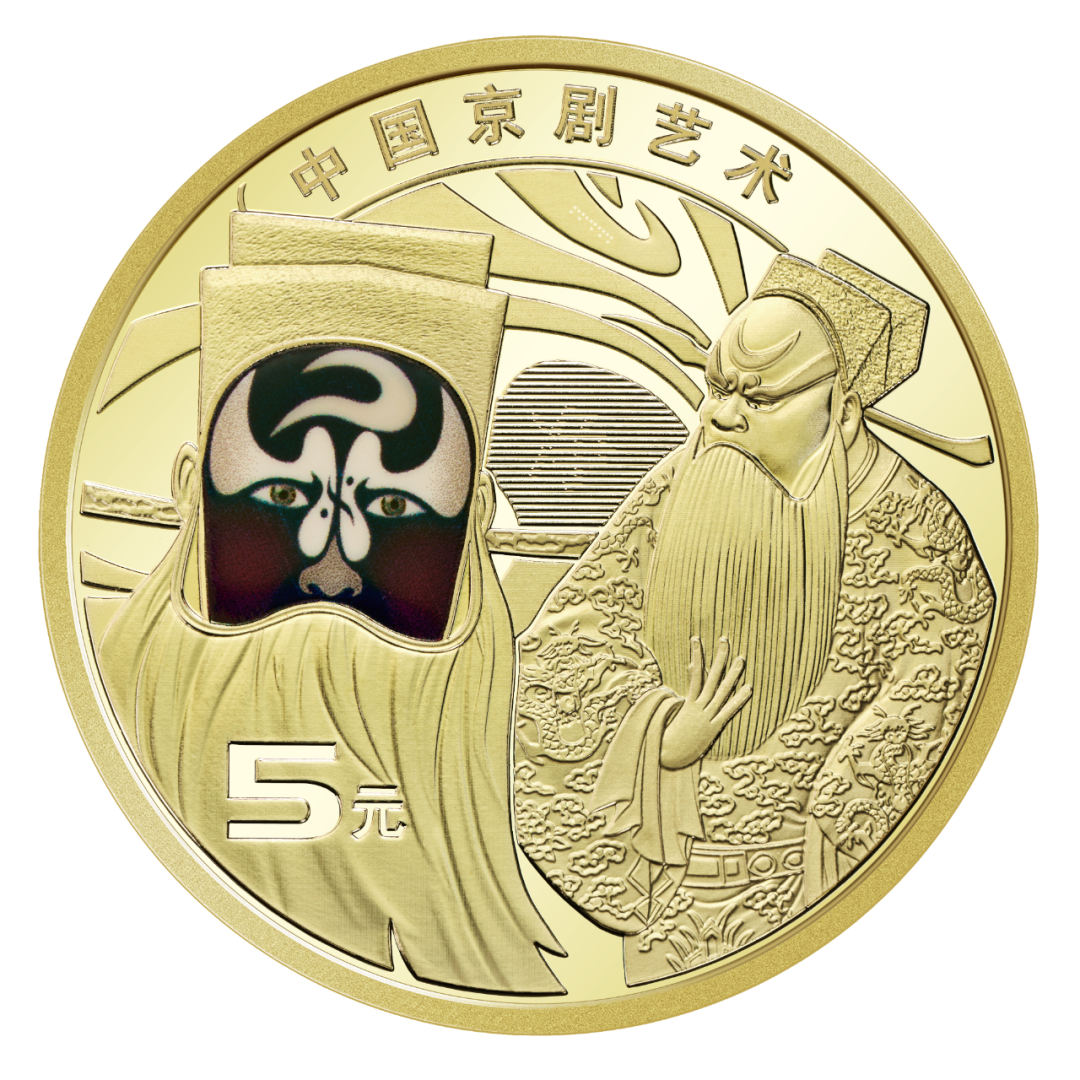
Chinese Peking Opera Art Jing Role Commemorative Coin 2025

Obverse (Front): The central design features the National Emblem of the People’s Republic of China. The country name “People’s Republic of China” is inscribed above the emblem, and the year “2025” is inscribed below. The background is accented with traditional Chinese opera musical instruments.

Reverse (Back): The main motif depicts the Jing (Painted Face) role from Chinese Peking Opera. Portions of the design feature a colorized finish, complemented by decorative graphic elements. The inscriptions “Chinese Peking Opera Art” and the face value “5 YUAN” are also included.

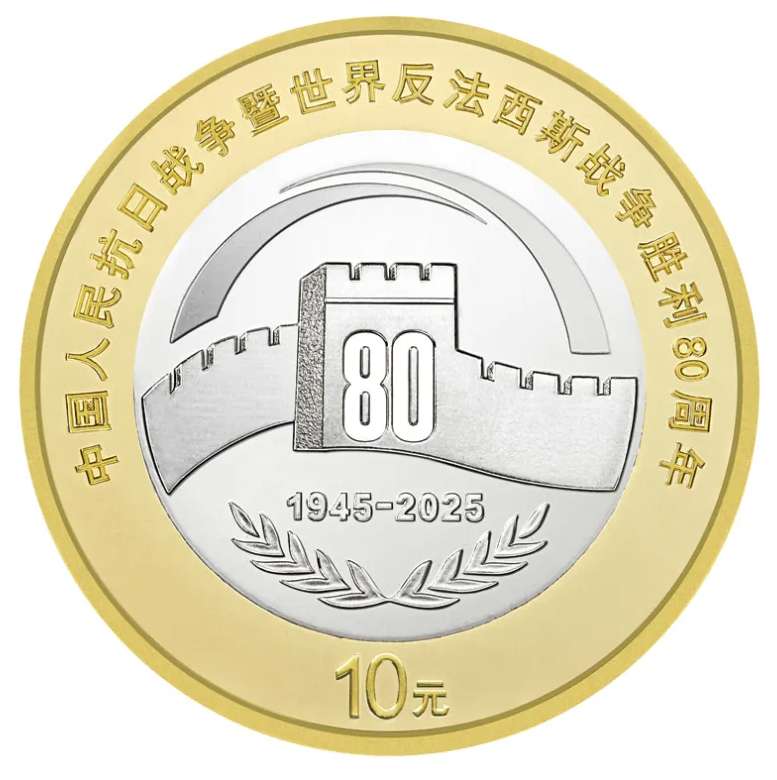
80th Anniversary of the Victory in the Chinese People’s War of Resistance Against Japanese Aggression and the World Anti-Fascist War Commemorative Coin (2025)

The reverse side depicts the official emblem of the commemorative events marking the 80th anniversary of the victory in the Chinese People’s War of Resistance Against Japanese Aggression and the World Anti-Fascist War. The inscriptions include “80th Anniversary of the Victory in the Chinese People’s War of Resistance Against Japanese Aggression and the World Anti-Fascist War” and the denomination

2025 Lunar New Year Commemorative Coin (Issued in 2024)2025 Lunar New Year Commemorative Banknote (Issued in 2024)2025 Lunar New Year Commemorative Coin (Issued in 2024)

The main image depicts children putting up spring couplets, supplemented by decorative designs of Shanxi-style dwellings. Above, the denomination numeral “20” and its pinyin “YUAN” are displayed. Below are floral and dynamic holographic patterns, the year “2025”, Governor’s seal, denomination numeral “20”, and “The People’s Bank of China” rendered in pinyin, Mongolian, Tibetan, Uyghur, and Zhuang languages, accompanied by the Chinese text “贰拾圆”.

Why Was Bitcoin Invented?

The invention of Bitcoin by Satoshi Nakamoto was in direct response to the dissatisfaction with the traditional banking system, particularly the lack of privacy, high transaction fees, and the ability of governments and financial institutions to inflate currency supply, leading to devaluation and financial crises. 

Who Invented Bitcoin?

Bitcoin was invented by an individual or group of individuals using the pseudonym Satoshi Nakamoto. 

Nakamoto introduced Bitcoin in 2008 with a white paper titled “Bitcoin: A Peer-to-Peer Electronic Cash System,” and then released the first Bitcoin software in 2009, launching the network.

What Do I Need to Use Bitcoin?

First, you’ll require a crypto wallet, which is software that allows you to store, send, and receive Bitcoin. This wallet gives you a public key, which is like your Bitcoin address that others can use to send you Bitcoin, and a private key, which you use to authorize transactions. It’s crucial to keep your private key secret, as it provides full control over your Bitcoins.

What Does Decentralized Mean?

A decentralized system distributes power and control across multiple points, rather than being concentrated in a single location or managed by a single entity. Think of it like a network of interconnected villages managing their affairs independently, compared to a central kingdom where a single ruler makes decisions for the entire land.